What Makes a Su Embroidery Piece Valuable?
There is no reliable public price index for contemporary Suzhou embroidery. Here are the factors that actually move a valuation, in the order a careful buyer should check them.
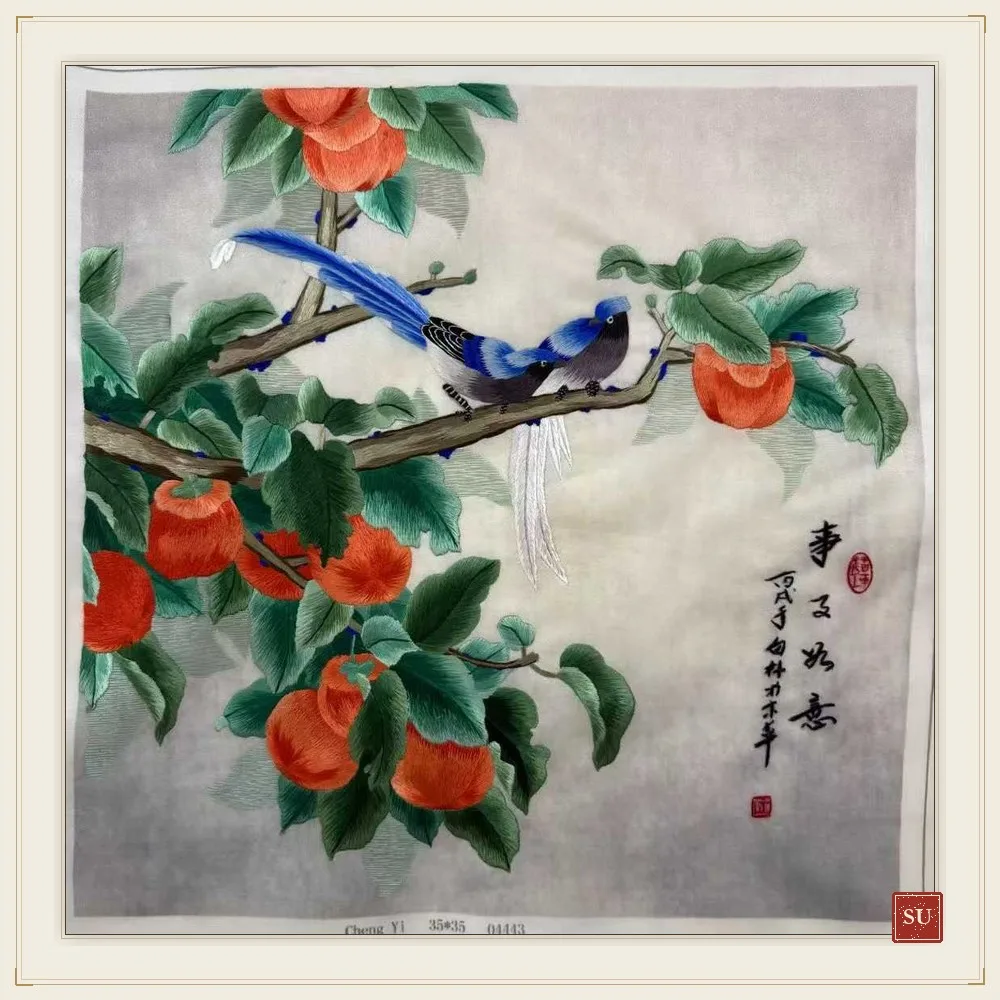
It is tempting to look for a simple rule: bigger is worth more, older is worth more, a famous subject is worth more. None of those holds reliably for contemporary Suzhou embroidery. There is no transparent public auction index for this material, and any seller who quotes one should be asked where it comes from.
What you can do is work through a short list of observable factors. Most of them are visible in the object itself, which is why learning to read a piece is the best preparation for buying one.
1. Workmanship, measured at the stitch
This is the first and largest factor. How fine was the silk split? Are colour transitions layered rather than stepped? Do stitch directions follow the forms? Are the smallest details crisp? Two panels of identical design and size can sit far apart in price because one took three times as many hours at the frame.
The practical consequence is that size is a poor proxy. A small, densely shaded flower may represent more labour than a large, openly worked landscape. Compare stitch density and fineness, not the outside dimensions of the frame.
2. Labour and the reality of time
Hand stitching cannot be meaningfully accelerated without changing the result. Thread is split by hand, shading is built in layers, and the last details are worked with the thinnest strand. A studio quoting a short turnaround for a large, finely shaded piece is describing a different object from the one you are imagining.
Ask how long a piece took and how many people worked on it. A precise, unembarrassed answer is a good sign; a vague claim of many months attached to a plainly quick panel is not. This is also the point at which the hand-versus-machine question becomes a valuation question rather than a curiosity.
3. Design quality and suitability to the medium
A good embroidery design is not simply a good painting copied onto silk. It accounts for what thread can do: directional sheen, soft gradients, the decision to leave ground fabric visible, and the viewing distance of the finished object. Designs drawn specifically for embroidery tend to age better than photographs transferred literally.
Composition matters too. A panel with a clear focal point and controlled empty space reads better at a distance than one filled uniformly. This is an aesthetic judgement, but it is a consistent one across collectors and interior designers.
4. Condition, and why it outweighs age
Fading, water marks, rippling, flattened stitches, insect damage and poor reframing all reduce value — and most are irreversible in a textile. For contemporary work, condition usually matters more than age: a well-kept recent panel is a better object than a slightly older one that has spent a decade in sunlight.
Ask about the mount as well as the silk. Adhesive on the face, direct contact with glass and a frame that cannot be opened are all liabilities, because they make future conservation harder. Our care guide sets out what a protective mount looks like.
5. Provenance and documentation
For older pieces, a documented studio, embroiderer, exhibition or collection history can matter a great deal. For new work, the useful equivalent is ordinary paperwork: which studio made it, when, from what design source, with an invoice that describes the piece accurately.
Certificates are only as strong as the issuer. A generic card saying authentic hand embroidery adds little; a named studio record with photographs of the work in progress adds a lot. Keep your invoice and any correspondence with the piece — future buyers will ask the same questions you are asking now.
6. Format, subject and market demand
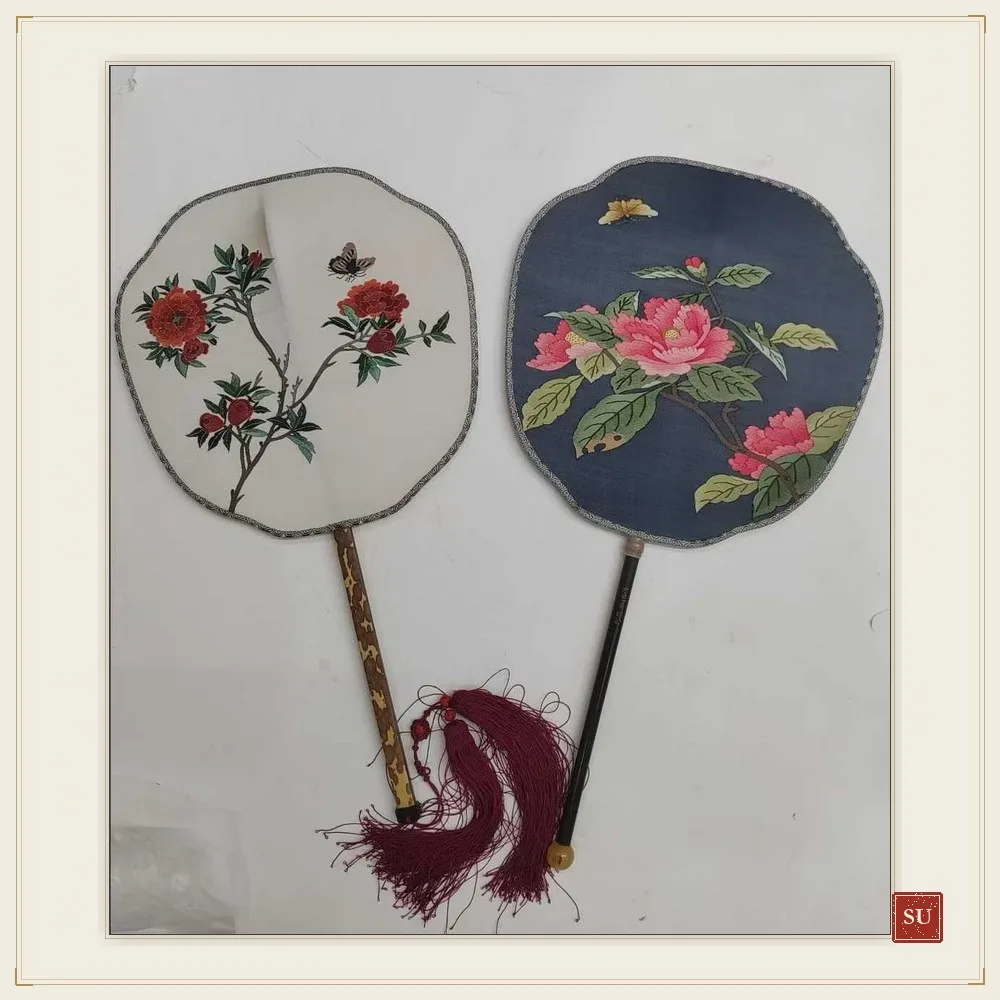
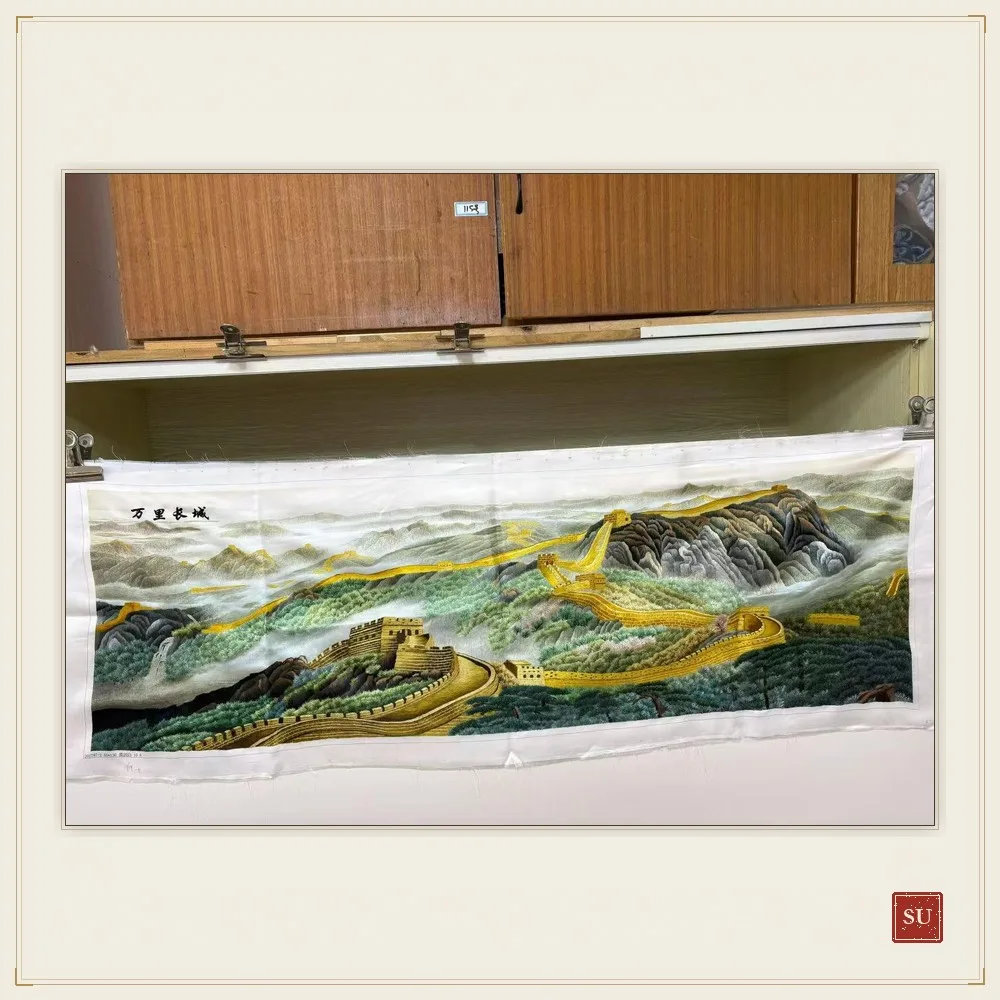
Double-sided work, finely worked small formats and technically demanding subjects generally carry a premium because they are harder to make. Popular subjects — peonies, koi, birds and flowers, landscapes — are easier to resell or gift than an obscure private commission, simply because more people are looking for them.
But be sceptical of investment language. This is a decorative and craft market, not a liquid asset class. Buy a piece because you want to live with it; treat any future resale value as uncertain. If you are planning a bespoke work, our guide to commissioning covers the questions to settle before work begins.
Key takeaways
- Stitch fineness and labour hours drive value more reliably than size or age.
- A design conceived for thread ages better than a photograph transferred literally onto silk.
- Condition and a reversible, protective mount outweigh modest differences in age.
- Named studio provenance and an accurate invoice are worth more than a generic certificate.
- Treat this as a craft and decorative market, not a liquid investment.
See the technique in the collection
FAQ
Is Su embroidery a good investment?
It should be bought primarily as an object to live with. There is no transparent public price index for contemporary work and resale is not liquid, so treat any claim of guaranteed appreciation with scepticism.
Does a bigger panel always cost more?
No. Labour follows stitch count and thread fineness. A small, densely shaded piece can represent far more work than a larger, more openly stitched one.
How much does a certificate add?
Only as much as the issuer's credibility. A named studio record, clear photographs and an accurate invoice are more useful than a generic authenticity card.
What is the single biggest thing that reduces value later?
Light damage. Fading is cumulative and irreversible, so hanging position matters from the day the piece arrives. Poor mounting and water marks are the next most common problems.