A Short History of Suzhou Embroidery
From a silk-producing region to a named craft tradition: a concise, unromanticised account of how Su embroidery developed and why it is still practised today.
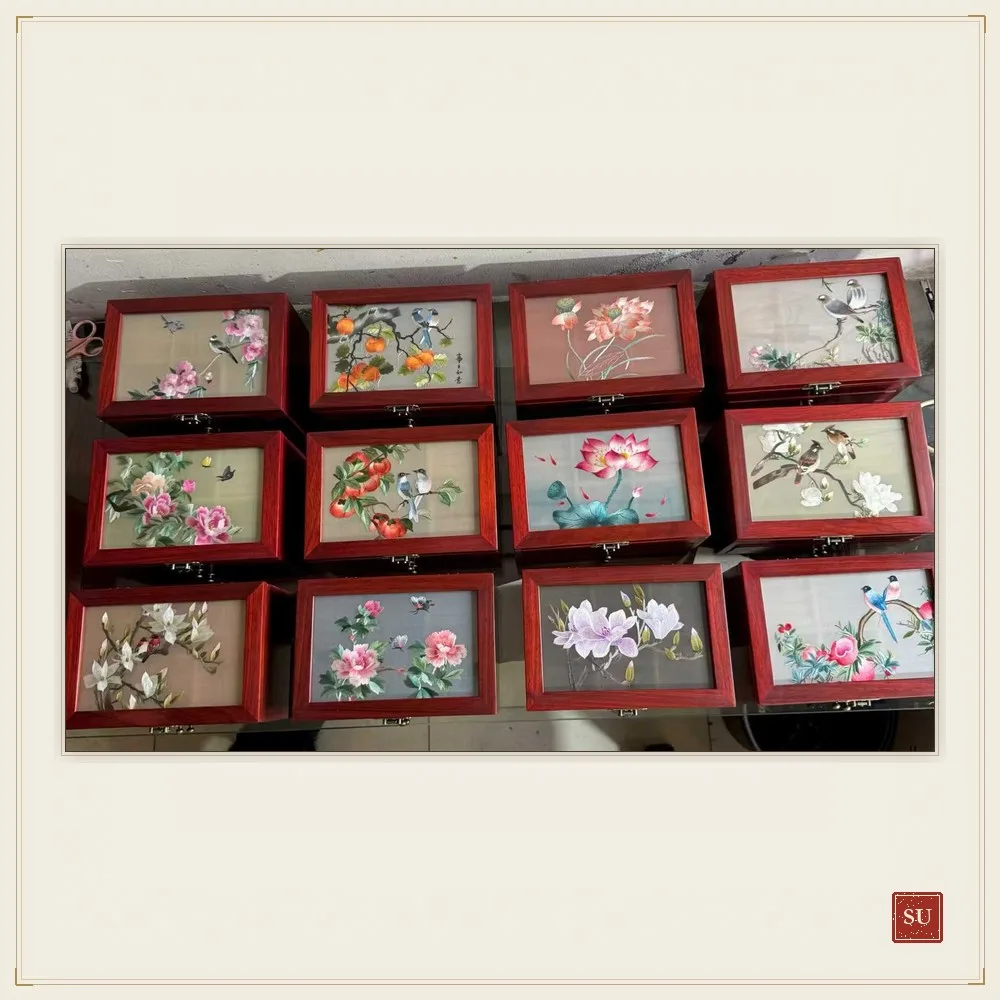
The history of Su embroidery is less a sequence of inventions than a long accumulation of favourable conditions: a city with silk, a class of patrons who wanted images on silk, and workshops able to pass technique from one generation to the next. That is why the story is usually told through places and institutions rather than through a single founding moment.
This is a short account, and deliberately cautious with dates. Popular summaries often attach precise years to developments that were gradual and regional. What follows sticks to the broad, well-attested shape of the tradition.
Why Suzhou, of all places
Suzhou sits in the lower Yangtze delta, a region historically associated with rice, waterways, gardens and silk. Sericulture, reeling, weaving and dyeing all developed in the same economic zone. An embroiderer there had access to fine ground fabric, consistent thread and skilled dyers without any of those materials having to travel far.
The city also had a concentrated literati and merchant culture. Gardens, painted albums, calligraphy and decorated interiors created steady demand for images that were more durable than paper and more intimate than a hanging scroll. Embroidery fitted into that world as furnishing, gift and personal ornament at the same time. Our guide to silk and Jiangnan looks at this setting in more detail.
From domestic needlework to a recognised style
Embroidery was practised widely across China as a domestic skill long before it was a named regional school. What changed in the Jiangnan area was the degree of specialisation: workshops, pattern drawers, dyers, frame makers and finishers working in proximity, with designs borrowed increasingly from painting rather than from folk motifs alone.
By the Ming and Qing periods, sources describe Suzhou work as distinctively fine and even, with a taste for pictorial subjects — flowers, birds, landscapes and figure scenes. The vocabulary of qualities still quoted today (flat, even, fine, dense, smooth, harmonious, lustrous) belongs to this mature phase, when a recognisable house style had become something a buyer could ask for by name.
Painting becomes the reference
The decisive artistic shift was the move toward painting as a source. Instead of repeating a fixed motif, embroiderers began to interpret ink-wash landscapes, bird-and-flower compositions and album leaves, using thread direction and split silk to imitate brushwork and washes. That ambition — to make silk behave like pigment — is what pushed shading techniques to become so refined.
It also created a division of labour. A design might be drawn by one hand and stitched by another, which is why provenance and studio records matter in older pieces. It is still common today: a studio may hold a library of patterns and employ specialists for particular subjects.
The modern period
In the late nineteenth and early twentieth centuries, Suzhou embroiderers began engaging with photographic and Western pictorial realism. Shen Shou is the name most often associated with this turn: she developed a shaded, lifelike approach usually called simulated or realistic embroidery and helped bring Su work to international exhibitions. Her career is a useful marker for a wider change rather than a solitary invention.
Through the twentieth century, training became more formal — research institutes, workshops and later private studios — and new formats appeared, including the double-sided panel worked as a display object rather than a furnishing. In 2006, Su embroidery was included in China's first national list of intangible cultural heritage, an acknowledgement of a craft that was already being taught and sold rather than being revived from nothing.
Where it is made now
The Zhenhu area on the western edge of Suzhou is the best-known contemporary cluster of studios and workshops, with training, supply and retail in the same neighbourhood. Work still moves between individual embroiderers and studios, and a single large commission may involve several hands specialising in different subjects.
Two things have changed most. The first is the source image: photographs and digital references are now common alongside painted patterns. The second is the market: buyers are as likely to be overseas collectors, interior designers or gift buyers as local patrons. Neither change has replaced the basic unit of the craft, which is still one person, one needle and a strand of split silk.
Reading historical claims with care
You will encounter confident statements online about exactly when a given stitch was invented, or about a piece being in an unbroken tradition of a particular number of years. Treat these as marketing language unless a museum catalogue or a documented provenance supports them. Crafts develop regionally and anonymously; neat origin stories are usually written afterwards.
What is verifiable and useful for a buyer is simpler: where the piece was worked, by which studio or workshop, with what materials, and whether the technique matches the description. Those four facts will tell you more than a dynasty label.
Key takeaways
- Su embroidery grew out of Suzhou's silk economy and its market for pictorial interiors, not a single invention.
- Interpreting painting with thread drove the development of fine shading and split-silk technique.
- Shen Shou's realistic embroidery marks the modern turn toward photographic and Western pictorial sources.
- The craft was listed as national intangible cultural heritage in 2006 and remains a working studio practice.
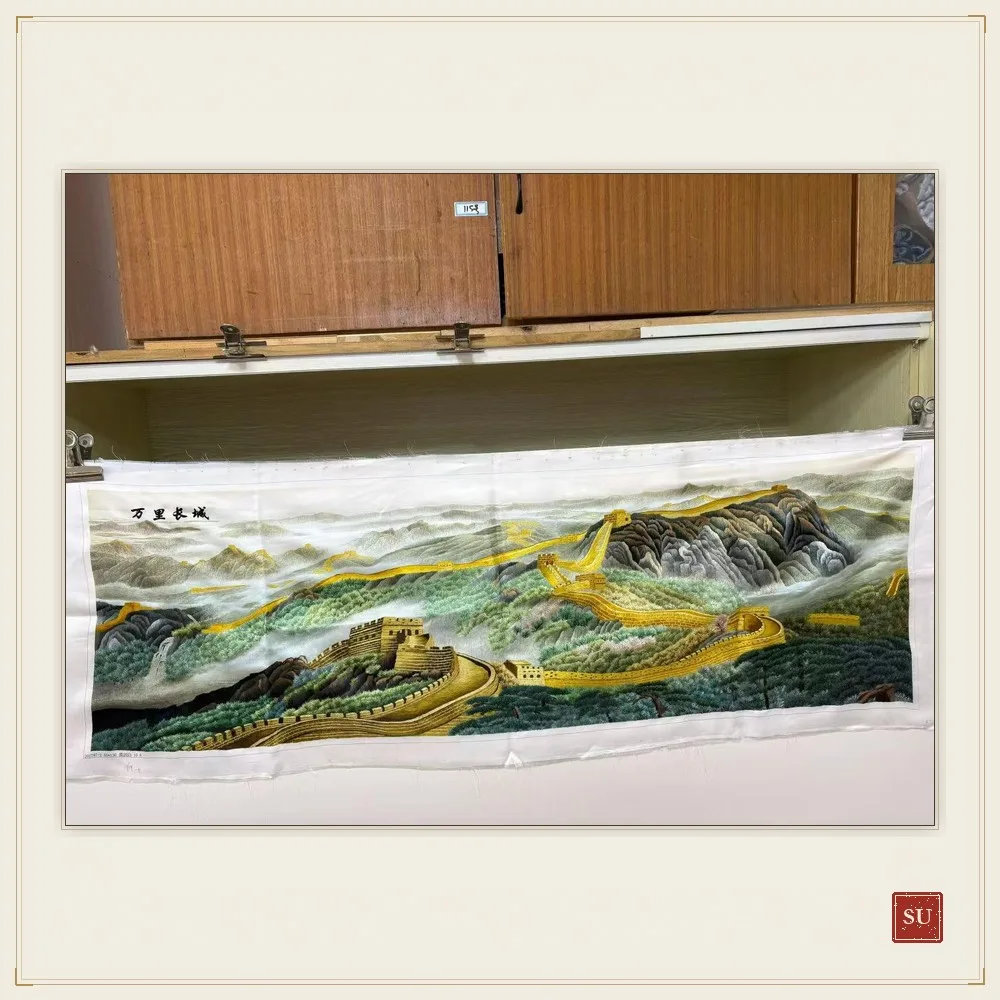
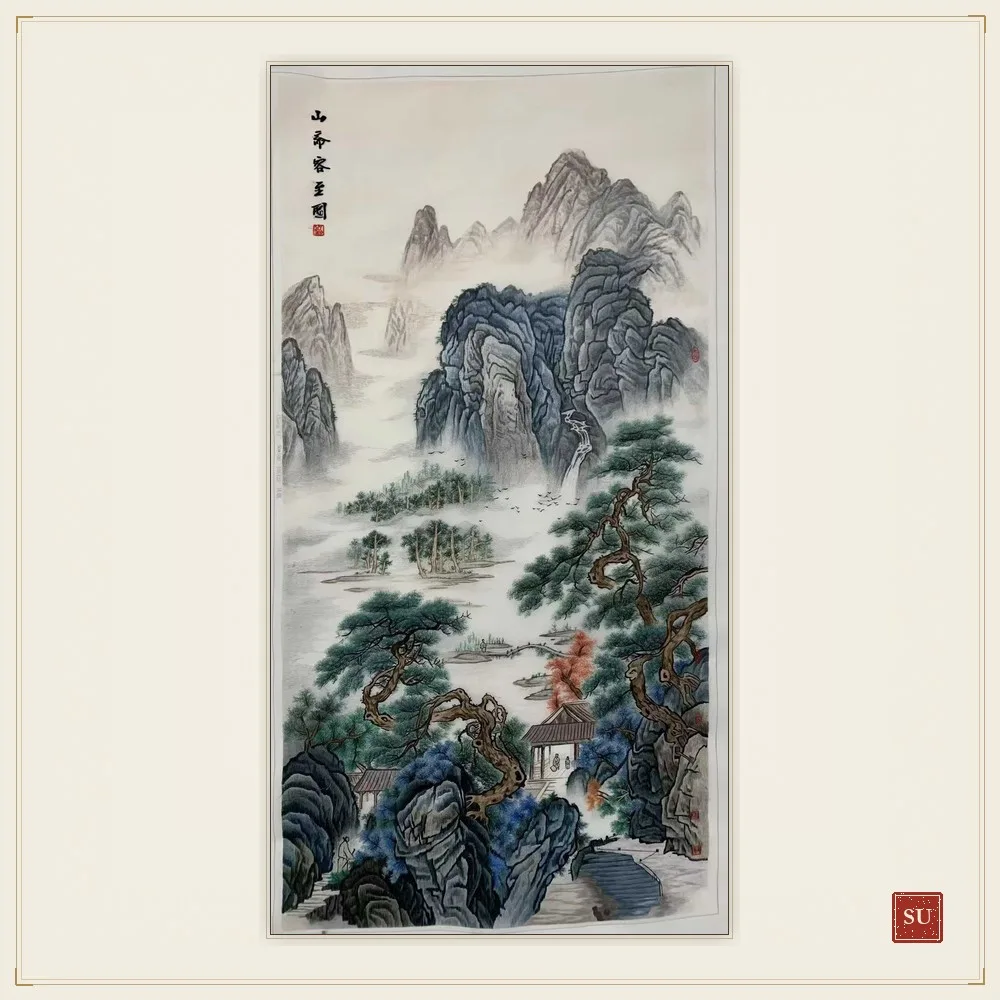
See the technique in the collection
FAQ
How old is Su embroidery?
Embroidery in the Suzhou region has roots going back many centuries, but the recognisable regional style is usually discussed in relation to the Ming and Qing periods, when workshops, painting-based designs and a distinct fine, even surface had matured. Precise founding dates are not well supported.
Who was Shen Shou?
Shen Shou was an influential late-Qing and early-Republic embroiderer associated with a more lifelike, shaded style often called simulated or realistic embroidery. She helped bring Suzhou work to international exhibitions and to formal teaching.
Is Su embroidery a protected heritage craft?
Yes. It was included in China's first national list of intangible cultural heritage in 2006. The listing recognises a living practice: the technique is still taught and used in commercial studios, not only demonstrated in museums.
Where is Su embroidery made today?
Contemporary production is concentrated around Suzhou, notably the Zhenhu area, with studios, training and supply businesses in the same region. Work may be divided among specialists for different subjects.