The Four Great Chinese Embroideries, and Where Su Fits
Su, Xiang, Yue and Shu are the four regional schools usually grouped together. A practical comparison of their materials, subjects and visual character.
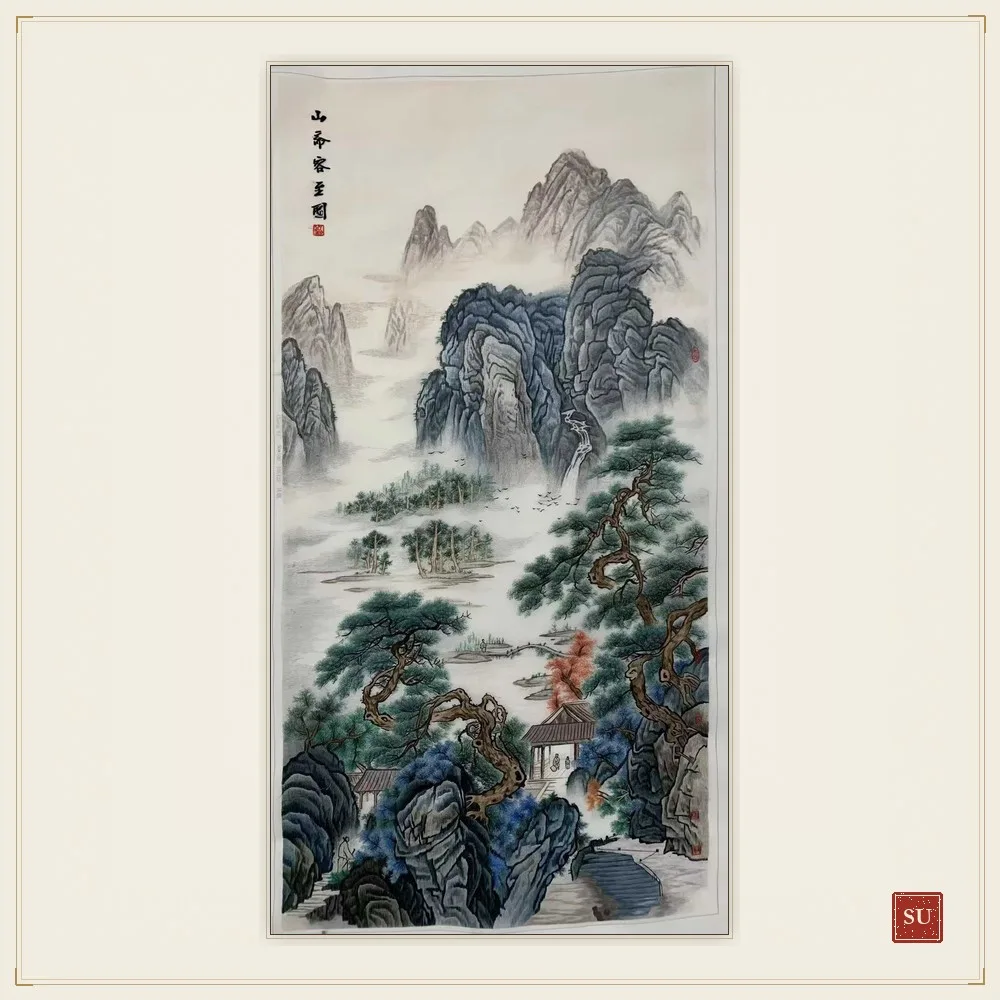
Chinese sources commonly group four regional traditions as the Four Great Embroideries: Su from Jiangsu, Xiang from Hunan, Yue from Guangdong and Shu from Sichuan. The grouping is a convenient way to organise a very diverse craft, not a ranking, and it says as much about regional pride as about technique.
For a buyer, the comparison is useful because it explains why two pieces both labelled Chinese embroidery can look nothing alike. Here is the short version, with the emphasis on what you can actually see.
Su (Suzhou, Jiangsu)
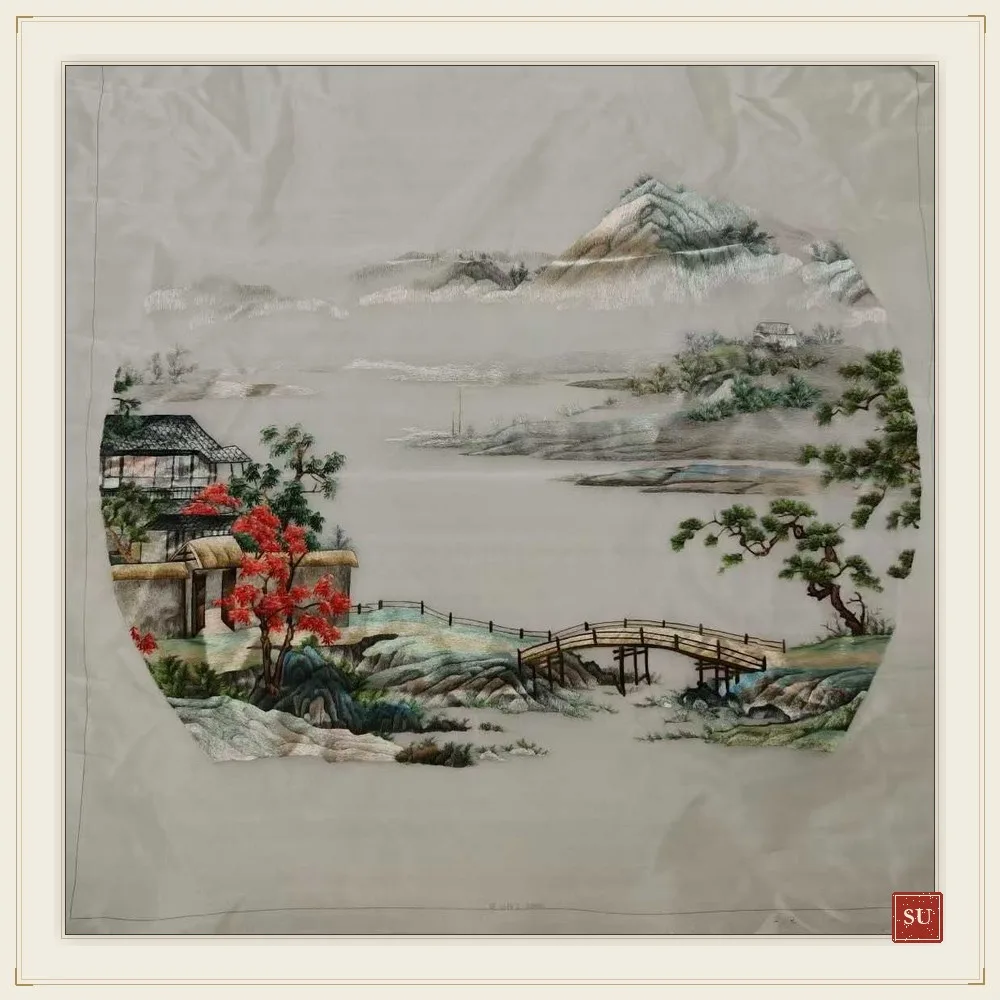
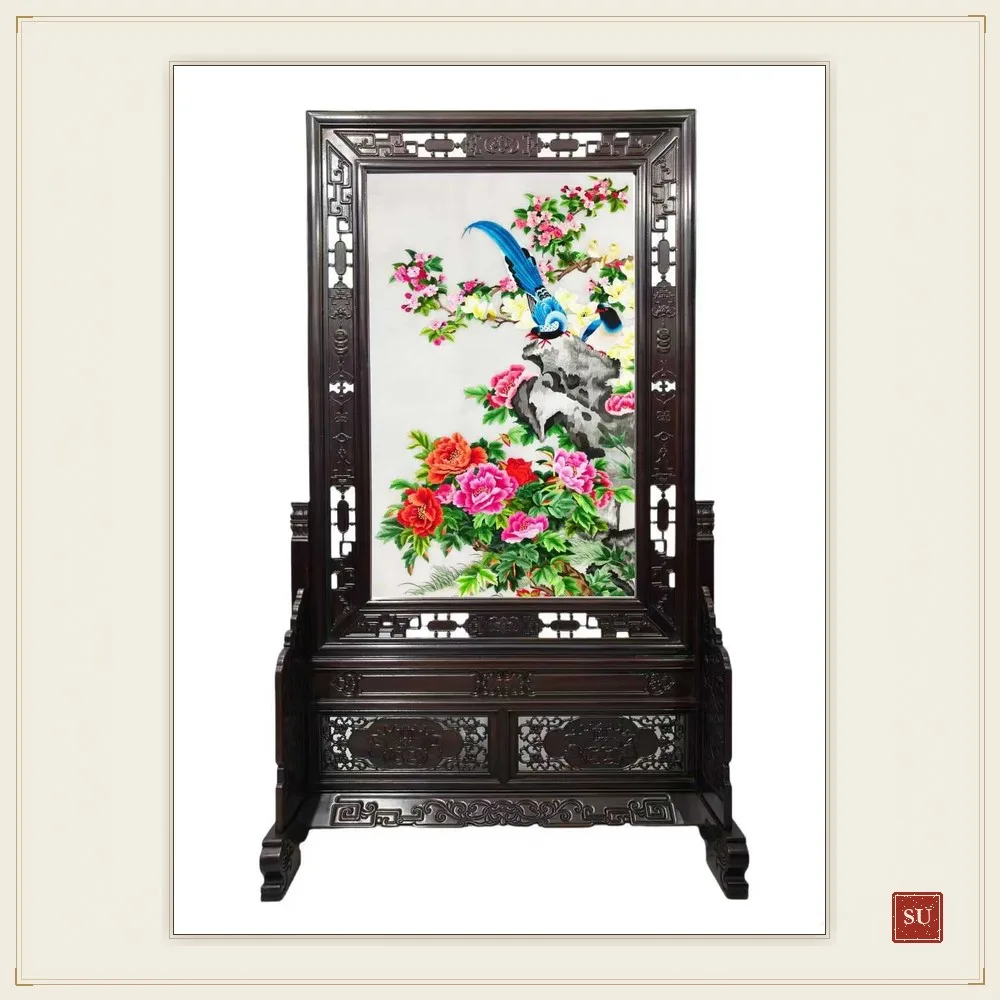
The Su school is associated with fine silk thread, split to fractions, laid into smooth, even shading that imitates painting. Its characteristic subjects are flowers and birds, cats and fish, ink-wash landscapes and figure scenes. The overall impression is restrained: soft transitions, a luminous but quiet surface, and very little outlining for its own sake.
It is the tradition this library is about, and the one most often chosen for framed art panels, table screens and double-sided display objects. If a piece looks like a watercolour that happens to catch the light as you move, it is probably working within the Su vocabulary.
Xiang (Hunan)
Xiang embroidery is generally bolder in colour and more graphic in construction, with a strong association with tigers, lions and other animals rendered with pronounced texture. Where Su work dissolves the boundary between two tones, Xiang work often makes the layering of strokes more legible, giving fur a deliberately energetic, raised quality.
The two are easy to confuse from a small photograph, because both can depict animals realistically. Look at the transitions: a soft, almost airbrushed gradient points toward Su; a more visible, directional pile of strokes points toward Xiang.
Yue (Guangdong)
Yue embroidery, from the Canton region, developed in a trading-port environment and is known for dense, richly coloured compositions — birds, flowers, phoenixes and festive scenes — often with gold or metallic thread and a strong decorative rhythm. It tends to fill the ground more completely than Su work, leaving less bare silk visible.
Its export history also means it is well represented in older Western collections. Pieces with elaborate, saturated, almost tapestry-like coverage are often Yue rather than Su.
Shu (Sichuan)
Shu embroidery, from Chengdu and the surrounding region, is noted for neat, even stitching and a bright but controlled palette, with subjects such as pandas, flowers, birds and folk scenes. It has a reputation for a compact, tidy surface and for practical as well as decorative objects.
As with the others, the distinction is one of tendency. A modern studio can work in more than one idiom, and a commission can deliberately borrow from another tradition. The four-name framework is a map, not a set of borders.
Why the comparison matters for a buyer
Descriptions in online listings are frequently loose, and a seller may use Su embroidery as a generic compliment. Knowing the broad visual tendencies gives you something to check against the photographs: how much bare silk is left, whether transitions are dissolved or stepped, how strong the outlining is, and whether metallic thread is doing decorative work.
It also helps with expectations. If you want a quiet, painting-like landscape, you are looking for the Su approach; if you want a dense, celebratory composition with gold, a Yue-style piece is a better fit. Neither is a higher grade — they are different answers to different briefs.
A note on authenticity
Regional labels do not by themselves certify hand work. Any of these four traditions can be imitated by machine embroidery or by printing onto silk. The checks are the same in every case: a macro photograph of a colour transition, a raking-light shot showing directional sheen, and a view of the reverse of the textile.
For the specific signs that distinguish hand stitching from machine output, see our comparison guide. For the broader context of how the Su school developed, see the short history.
Key takeaways
- The Four Great Embroideries are Su (Jiangsu), Xiang (Hunan), Yue (Guangdong) and Shu (Sichuan).
- Su is characterised by split-thread, painting-like shading and restrained colour; Xiang by textured realism; Yue by dense colour and metallic thread; Shu by neat, bright, compact work.
- The grouping is descriptive, not a quality ranking, and modern studios may borrow across traditions.
- Regional labels do not prove hand work — always check stitch-level photographs.
See the technique in the collection
FAQ
Are the Four Great Embroideries a formal quality ranking?
No. It is a conventional grouping of four prominent regional traditions. It describes differences in materials, subjects and visual character, not a hierarchy.
Which one is most collectible?
There is no general answer. Condition, workmanship, provenance and the reputation of a particular studio matter more than the regional label. Su work is the most widely represented in international framed-panel markets.
Can one studio produce more than one style?
Yes. Contemporary workshops work from varied source material and can take commissions in different idioms. Treat regional names as a description of the visual approach, not a guarantee of where a needle was held.
How can I tell Su from Xiang embroidery in a photo?
Look at the tonal transitions and the surface texture. Su tends toward dissolved, smooth gradients and a flat, even sheen; Xiang often shows more visible, directional strokes, especially in animal fur.