Commissioning a Custom Su Embroidery: How the Process Works
From source image to framed panel: what a studio needs from you, what to agree before work starts, and the decisions that affect timeline, cost and the finished result.
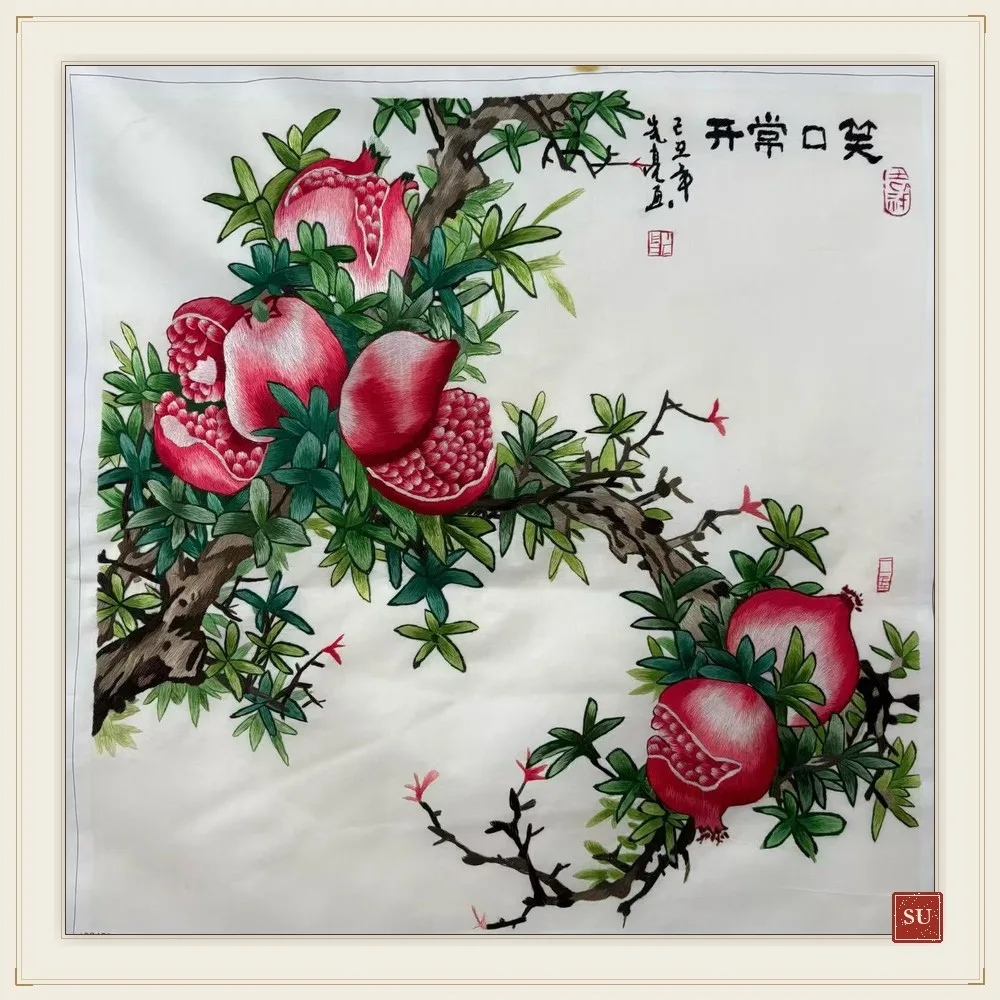
A bespoke piece is usually commissioned for one of three reasons: a subject that is not in any catalogue, a size or format that has to fit a particular room, or a gift with a personal image — a pet, a house, a garden, a family photograph. All three are possible, but they need different briefs.
The most common cause of disappointment is not poor stitching. It is a brief that was never settled: an image that cannot be translated into thread, a size agreed without a viewing distance, or a timeline that quietly assumes a coarser technique than the buyer expected.
Start with the source image
Embroidery is not a printer. A low-resolution, dimly lit photograph with a busy background gives the studio very little to work with, and the result will be an interpretation rather than a reproduction. Choose an image with a clear subject, good separation between forms, and enough detail in the areas you care about.
Say which parts matter. A client commissioning a pet portrait usually cares about the eyes and the fur texture; a client commissioning a garden may care about the arrangement of a few specific flowers. Marking up the reference image saves a round of guesses. If the source is a painting, confirm who holds the rights to it before work begins.
Agree the format and viewing distance
A twenty-centimetre fan, a round table screen and a 50 x 100 cm wall panel are seen from completely different distances, and the stitch fineness should follow. Decide where the piece will live before you decide how big it is — that single conversation prevents a lot of over-specification.
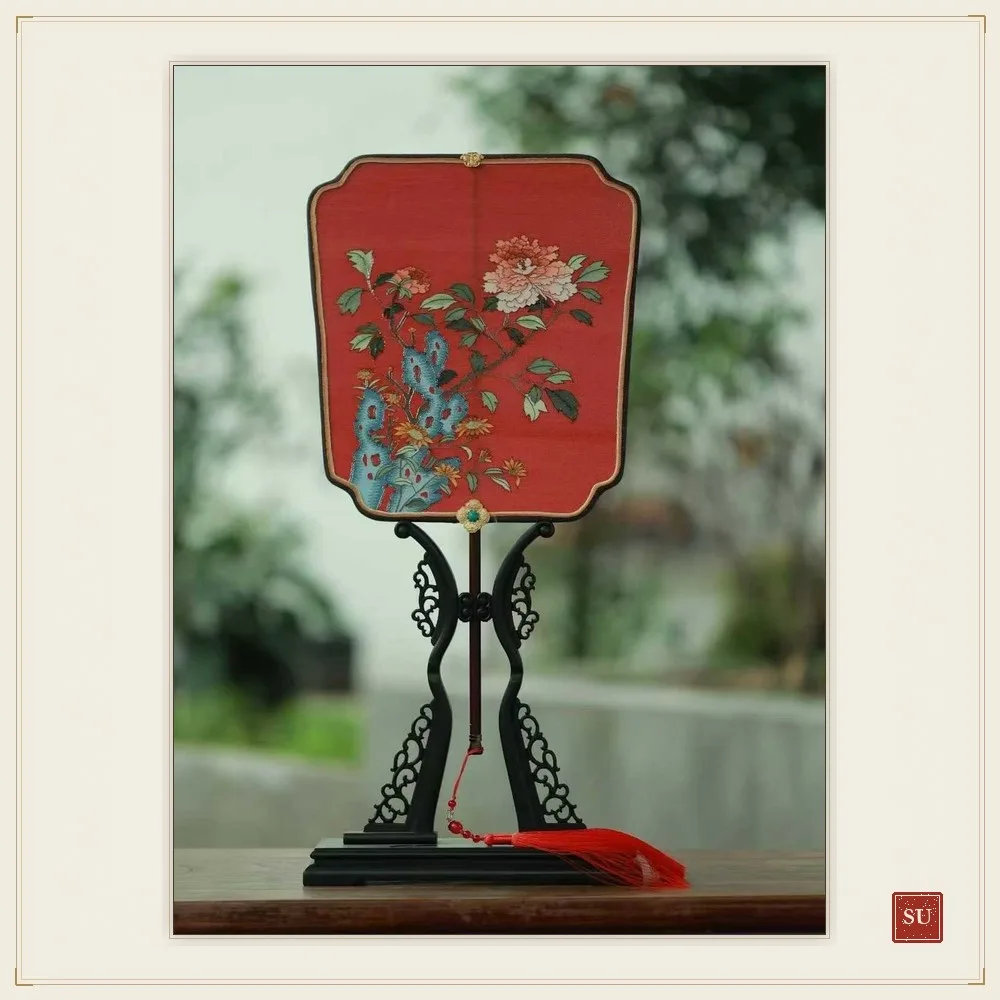
Then choose the mount: framed panel, open double-sided frame, table screen, fan or unframed silk. Some formats rule certain techniques in or out; a double-sided piece, for example, needs a translucent ground and an open display, and is a different proposition from a standard framed work.
Specify fineness in plain language
Rather than asking for the best quality, describe the result you want: soft, step-free shading in a face; visible, energetic strokes in an animal's coat; broad, painterly areas in a landscape. Those descriptions map onto concrete decisions about how far the silk is split and how densely the area is filled.
Be aware of the trade-off. Finer work looks smoother and takes longer, which affects both price and delivery date. A good studio will tell you which parts of the design justify that time and which do not — a flat background gains little from being worked with a sixteenth of a strand.
Approvals: what to ask to see
Ask for the pattern or a digital layout before stitching begins, then one progress photograph at roughly the half-way point. At that stage the composition can still be adjusted; once dense shading has been laid down, changes mean unpicking.
Agree in writing what happens if you dislike the progress image. A clear, small number of revision points is normal; unlimited changes are not compatible with hand work. Also ask for final photographs of the piece before it is framed, including a macro shot of one colour transition.
Timeline, price and payment
A realistic schedule accounts for design, thread dyeing or matching, stitching, mounting and packing — not just the hours at the frame. Ask for a written estimate that separates the embroidery, the frame or mount, and shipping or insurance, so you can see what each decision costs.
Confirm the payment structure, what is refundable at each stage, and who owns the pattern afterwards. These are ordinary commercial questions, not awkward ones; a studio that works with overseas clients regularly will have standard answers. Keep the invoice and the reference image with the piece — they are part of its provenance.
Framing, shipping and arrival
Specify a protective, reversible mount: acid-free backing, a spacer so the silk does not touch glazing, UV-filtering glazing if the piece will be in a bright room, and no adhesive on the embroidered face. For international delivery, ask how the frame is protected, whether glazing is insured, and what to do if a pane arrives cracked.
When it arrives, photograph everything before unpacking fully, then check that the silk lies flat and that no ripple appeared near the edges in transit. Hang it out of direct sun from day one — the care routine starts immediately, and fading is cumulative.
Key takeaways
- A clear, high-resolution source image with a marked-up priority area is the single most useful thing you can supply.
- Settle format and viewing distance before size; they determine appropriate stitch fineness.
- Describe the result in plain visual terms rather than asking for the best quality.
- Get a layout approval and one mid-progress photograph; agree revision limits in writing.
- Specify protective framing and confirm shipping insurance before the piece leaves the studio.
See the technique in the collection
FAQ
Can any photograph be turned into Su embroidery?
Almost any image can be interpreted, but not every image translates well. Clear subjects, good separation and adequate resolution help. Very busy or dim photographs produce an interpretation rather than a likeness.
How long does a commission take?
It depends on size, fineness and the studio's schedule. Ask for a written schedule that includes design, thread preparation, stitching, mounting and packing rather than only the stitching stage.
Should I ask for the finest possible thread everywhere?
No. Fineness is a tool, not a universal virtue. It is worth the time in faces, petals and fine detail, and usually wasted on flat backgrounds. Let the studio allocate it where it changes the result.
What should be in the written agreement?
Source image and priority areas, dimensions and format, mount specification, fineness expectations, approval stages and revision limits, a staged timeline, an itemised price, and what happens if the piece is damaged in transit.