Caring for Silk Embroidery: Light, Dust, Framing and Storage
A practical, conservative care routine for a framed embroidered silk panel — what to do regularly, what to avoid, and when to call a conservator.
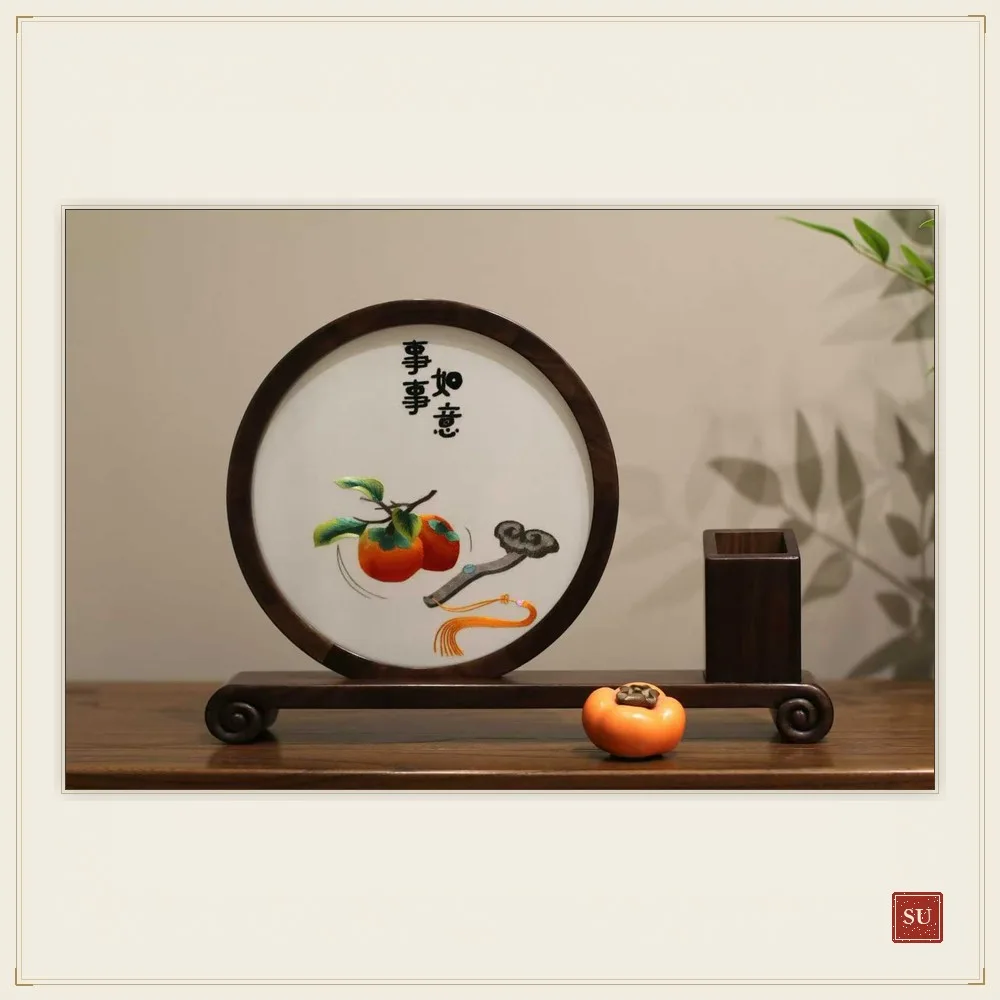
An embroidered silk panel is a textile that happens to be hanging on a wall. Almost every care mistake comes from forgetting that: people treat it like a print, spray glass cleaner on it, wipe the surface, or hang it where a painting would be perfectly happy.
The good news is that the routine is undemanding. Most of it consists of choosing the right place once, and then leaving the piece alone.
Light: the main long-term risk
Silk fibres and many dyes are sensitive to ultraviolet and to sustained bright light. Fading is cumulative and irreversible; a panel does not recover if you move it afterwards. Hang embroidery where you can read it comfortably but where direct sun never falls on the surface, and avoid spotlights positioned close to the frame.
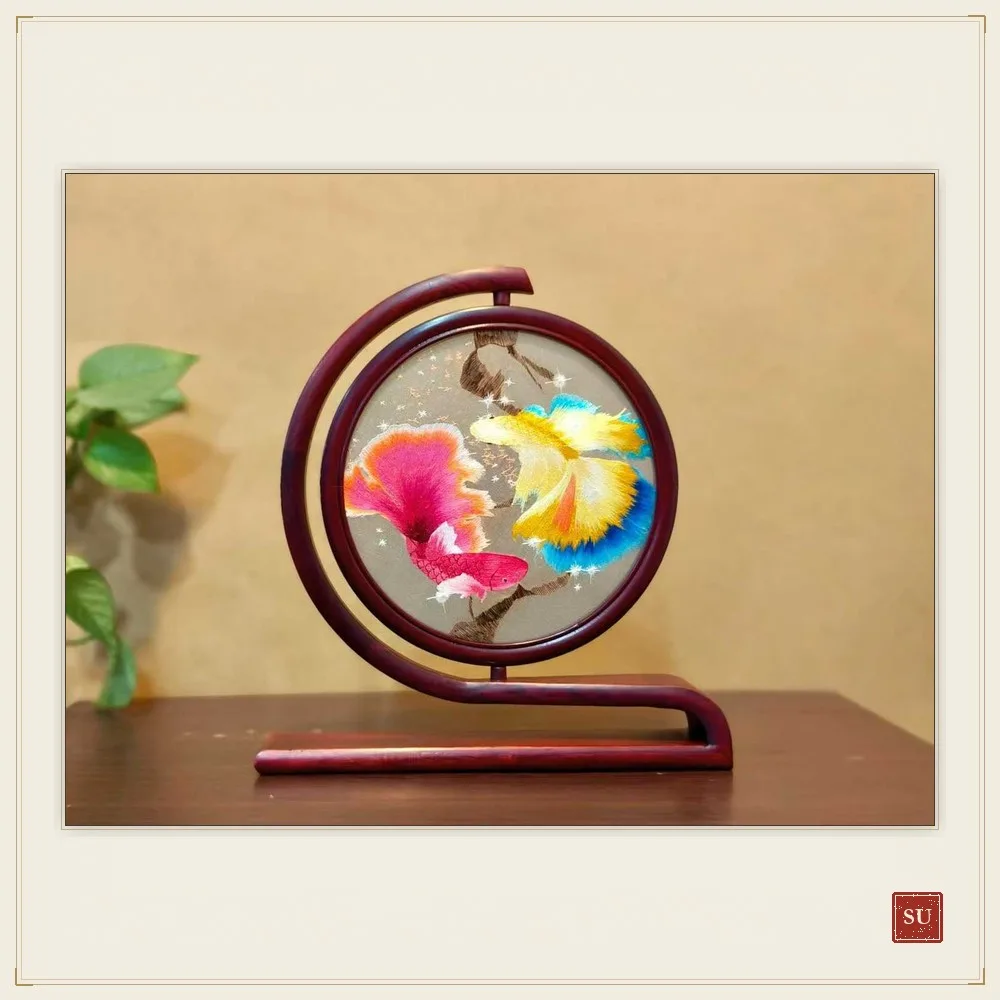
UV-filtering acrylic or glass is worth specifying when a piece is framed or reframed. It is not a licence to put the panel in full sun — it slows damage rather than preventing it — but it is a cheap, passive precaution. If you own a rotating table screen or fan, turn it periodically so exposure is even.
Humidity, heat and where not to hang
Silk is hygroscopic: it takes up and releases moisture, and the ground fabric responds by tightening or slackening. Repeated swings can show up as gentle rippling near the frame edges. Aim for a stable, ordinary indoor environment rather than a special one, and avoid bathrooms, kitchens, uninsulated attics and the wall directly above a radiator.
As a rough guide, if a room is comfortable for books and wooden furniture it is comfortable for embroidery. Sudden changes matter more than a single number, so a shaded hallway with steady conditions beats a bright, sunny, temperature-swinging living-room wall.
Dusting without touching the stitches
For a glazed frame, clean the glazing, not the textile: a soft, dry microfibre cloth, with any cleaner sprayed onto the cloth and never onto the frame. For an open-mounted piece, use a clean, soft brush and gentle strokes, or a low-suction vacuum held at a distance with a mesh screen between the nozzle and the silk. Do not rub, and do not use a damp cloth on the embroidery.
Never press the surface to test whether it is secure. The stitch relief is part of the piece and flattens under pressure. If dust has become ingrained, or if you see a stain, that is a conservator's job rather than a household cleaning problem.
Framing and mounting that protects
A good mount holds the silk evenly under tension without adhesive on the face, keeps the stitches away from the glazing, and can be opened again in the future. Acid-free backing and a spacer or fillet are standard precautions: direct contact between silk and glass is a bad idea, particularly in a room where condensation is possible.
If you reframe, ask the framer to work with textiles rather than treating the panel as a print. That means no dry mounting, no spray adhesive and no trimming the silk to fit a standard frame. For double-sided pieces, an open mount that allows light through and both faces to be seen is essential.
Handling, moving and short-term storage
Carry a framed piece by the frame with two hands, upright, and never by a top corner or hanging wire alone. If an unframed panel must be moved, support it fully on a clean flat board; folding creates a crease that can break filaments along the fold line.
For storage, lay flat in a dark, dry place, interleaved with acid-free tissue, with nothing heavy stacked on top. Roll only if a conservator advises it and only around a wide, clean tube with the embroidery facing outward. Avoid plastic bags in humid conditions — trapped moisture is worse than dust.
What to do about damage
Small issues worth monitoring: a slight ripple near the edge, a loose frame backing, a dull film on the inside of the glazing. Anything involving water, ink transfer, mould, insect damage, a tear in the ground or a broken thread field should go to a textile conservator.
Do not attempt to re-stitch a damaged area yourself. Matching a split silk filament and the original stitch direction is specialist work, and an amateur repair is harder to undo than the original damage. Photograph the problem, note when you first saw it, and keep the piece stable until you can get advice. Our guide to what makes a piece valuable explains why condition carries so much weight.
Key takeaways
- Fading is cumulative and irreversible — keep embroidery out of direct sun and close spotlights.
- Stable, ordinary indoor humidity beats a bright room with large swings.
- Clean the glazing, never the stitches; dust open mounts with a soft brush only.
- Use acid-free, reversible mounting with a spacer so silk never touches glass.
- Store flat, dark and dry; leave tears, stains and broken thread fields to a conservator.
See the technique in the collection
FAQ
Can I wash or dry-clean an embroidered silk panel?
No. Water, agitation and solvents can distort the ground, flatten the stitches and affect dyes. Keep cleaning to the glazing and to gentle dusting of an open mount.
Is UV-filtering glass enough to hang a piece in sunlight?
No. It slows fading but does not stop it. Choose a position where direct sun never reaches the surface, and treat UV glazing as an extra precaution.
How should I store an unframed panel?
Flat, in the dark, interleaved with acid-free tissue, with no weight on top. Avoid folding and avoid sealed plastic in a humid climate.
What should I do if a thread has come loose?
Do not pull or re-stitch it. Photograph it, keep the piece stable and out of bright light, and consult a textile conservator. An inexpert repair is usually harder to reverse than the damage.