


Certificates, Provenance and Buying Real Handwork
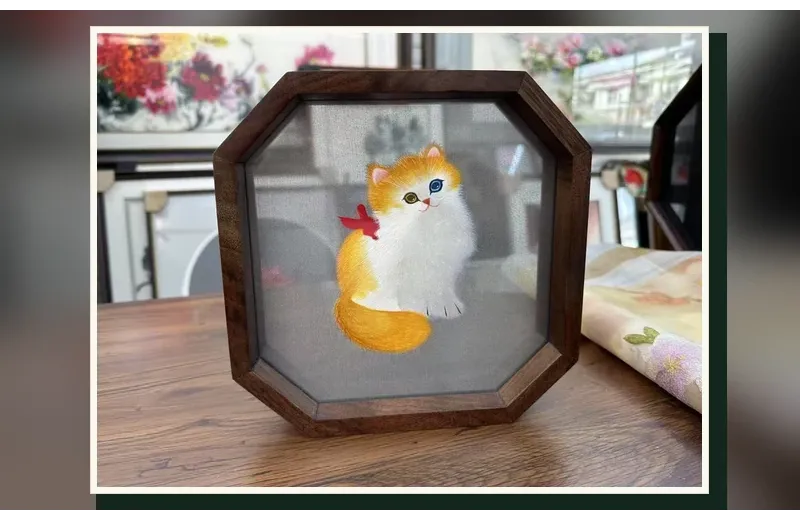
A certificate is useful paperwork. It is not proof. What proves a piece is hand-stitched is the piece itself, plus a believable record of how it was made.
What a certificate can tell you
A well-written document states the subject, dimensions, materials (silk ground and silk thread), technique, the studio or maker, and the date of completion. For a commissioned piece it may also record the client's brief. This is valuable for insurance, resale conversations and for anyone inheriting the piece later. Keep it with the purchase invoice and the condition photographs taken before dispatch.
What it cannot tell you
Paper can be printed. A generic "certificate of authenticity" with no maker, no dimensions and no photograph of the specific work tells you nothing about the object in the frame. There is also no single universal registry for contemporary Su Xiu, so be cautious about claims that a certificate "guarantees" a future value.
Questions worth asking
- Is the entire piece hand-stitched, or is it a machine-laid ground with hand-finished details?
- Did one embroiderer work it from outline to finish?
- How long did it take, and can you show progress photographs?
- What are the exact dimensions, materials and framing method?
- Can I see a photograph of the reverse before it is framed?
- What documentation comes with the piece for insurance and customs?
Price logic
One mid-sized panel occupies an experienced maker for roughly three months. A price far below that labour cost is a signal to look more closely, not a bargain to grab. That said, price alone is not a quality grade: size, subject density, technique (double-sided work is slower) and the maker's experience all matter. Compare like with like, and see what actually drives value.
Buy for the object
Hand embroidery is a slow, one-off object, not an asset class. Buy it because you want the shifting silk, the visible intelligence of the stitches and a piece a person spent a season making. Then keep the paperwork, check the reverse, and hang it somewhere with good light.
Practical checks: hand vs machine and reading the reverse.