


Splitting a Silk Thread: How One Strand Becomes Many
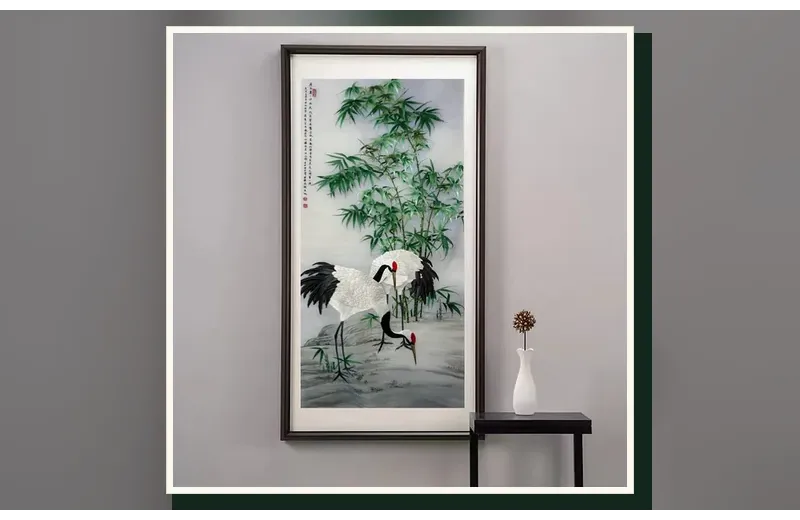
Before a single stitch is placed, a Su Xiu embroiderer may spend time doing something that looks almost like nothing: separating a silk thread into finer and finer filaments with her fingertips.
What is being split
A reeled silk thread is not a single solid fibre; it is a bundle of fine filaments twisted or held together. For ordinary sewing that bundle is the thread. For Suzhou embroidery it is the starting material. The embroiderer holds one end, gently separates the bundle into halves, then quarters, then eighths — and for the most delicate passages, still finer — keeping each division untangled and evenly tensioned.
This is called pi si (劈丝), literally "splitting silk". It is done by hand, by feel, and it is one of the first skills a student practises.
Why bother?
- Finer stitches disappear. A hair-thin filament leaves almost no visible entry point in the silk ground, so the surface reads as continuous colour.
- Shading becomes smoother. A thin filament can carry a tiny amount of one shade into a neighbouring shade without creating a hard edge.
- Detail becomes possible. A cat's whisker, the stamen of a peony or a fine ink line can be a single filament rather than a clumsy thread.
- Light behaves better. Fine filaments lie flatter and reflect light more evenly, which is part of the soft lustre Su Xiu is known for.
What it costs in time
Splitting is slow, and a very fine filament breaks more easily, so the needle must be re-threaded constantly. Combined with frequent shade changes, it is a real reason a mid-sized hand-stitched panel takes one embroiderer roughly three months. There is no machine setting that produces the same result, because the split is adjusted to the specific square centimetre being worked.
How to see the effect
Find the finest detail in a finished piece and look at it under raking light. If the line tapers slightly, sits flush with the surface and has a soft rather than glassy sheen, it was probably worked with split silk. A synthetic or unsplit thread looks uniformly thick and slightly raised by comparison.
Read Pure Silk Thread, how shades are dyed and matched, or the full guide to thread splitting.