


The Su Xiu Stitch Vocabulary: 9 Needle Techniques Explained
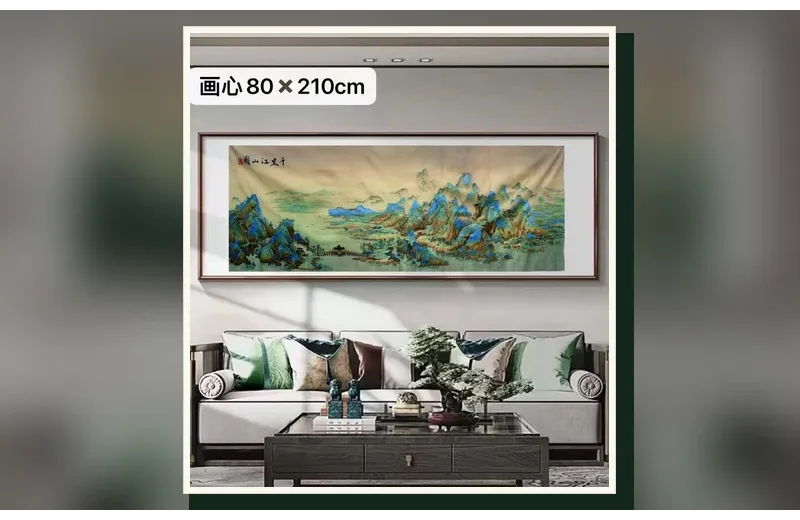
A finished Su Xiu panel looks like one continuous surface. In fact it is a toolkit of distinct stitches, each chosen for a particular texture — fur, feather, petal, stone, water.
The foundations
- Ping zhen (平针, flat / straight stitch). Short, parallel, evenly laid stitches that build a smooth, dense ground. The backbone of almost every panel; read the full article on ping zhen.
- Tao zhen (套针, layered / shading stitch). Rows of stitches overlap slightly so one shade blends into the next. This is the classic mechanism behind Su Xiu's soft colour transitions.
- Shi zhen (施针, added / scattered stitch). Fine stitches added over an established area to adjust a tone or suggest texture without rebuilding the ground.
For painterly effects
- Luan zhen (乱针, random / free stitch). Long, crossing stitches at varied angles, layered like brushstrokes. It renders fur, cloud, water and photographic shading; see random stitch explained.
- Xu zhen (虚实针, void-and-solid stitch). Densely worked areas alternating with sparse ones, so the silk ground itself becomes mist, distance or reflected light — borrowed directly from ink painting.
- Gun zhen (滚针, rolling stitch). Short stitches chasing one another along a curve, used for outlines, stems, whiskers and the flowing line of a garment.
For detail and texture
- Da zi / jie zi (打子, seed / knot stitch). Tiny knots for flower centres, stamens, the eye of a bird or the granular texture of a rock.
- Ke lin / scale stitch (刻鳞针). Overlapping arcs that build fish scales, bird feathers and roof tiles with a clear, rhythmic edge.
- Shuang mian xiu (双面绣, double-sided work). Less a single stitch than a whole discipline: both faces are finished, and every thread end is buried inside the ground.
How to see them
Stand about two metres away first and take in the image, then move close with a raking light. You will start to see where the stitch direction changes: it usually follows the form. A petal is stitched along its length; a rounded cheek is stitched along its curve. That is the difference between a picture copied onto fabric and a picture built out of thread.
One more thing worth knowing: these techniques are not applied in a fixed order. An experienced embroiderer moves between them constantly, which is why a single piece takes months and why two makers never produce quite the same surface.
Start with ping zhen, the foundation stitch, or browse the in-depth technique guides.