


What Is Su Embroidery? A Plain-English Introduction
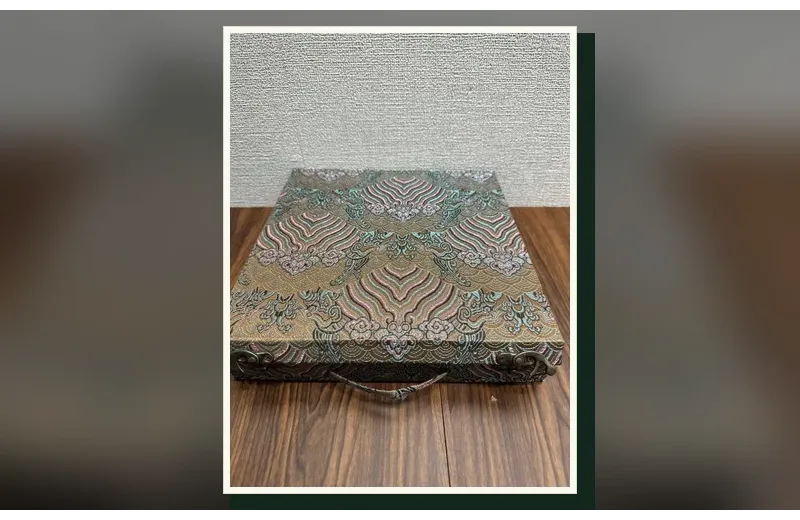
Su Xiu — usually translated as Suzhou embroidery or Su embroidery — is silk thread stitched by hand onto a silk ground, made in and around Suzhou in China's Jiangnan region. It is one of the Four Great Chinese Embroideries, and the one most associated with fine shading and pictorial subjects.
The short definition
Take a piece of silk fabric stretched on a frame. Take pure silk thread, split it down into very fine filaments, dye or select it in many graded shades, and pass it through the ground with a needle until a painting appears. That is Su Xiu. There is no loom, no printing and no machine; the image is made entirely of stitches, and typically one embroiderer sees a piece through from outline to finish.
Four things that make it recognisable
- Extremely fine thread. Splitting a silk strand lets the embroiderer work detail far below the width of ordinary embroidery floss.
- Smooth gradients. Dozens of near-adjacent shades are interleaved so colours melt into one another with no hard boundary.
- A flat, even surface. Stitches lie close and orderly; the effect is closer to a painting than to a raised, textured textile.
- Pictorial subjects. Flowers and birds, cats and koi, landscapes and figure scenes — often adapted from Chinese ink painting or photography.
Where it came from
Suzhou has been a silk centre for centuries, with the raw material, the dyeing knowledge, the wealthy patrons and the painting tradition all in one place. Embroidery developed alongside that silk economy — first for garments and devotional objects, later for screens, panels and collectible pictures. In the twentieth century, new stitch approaches such as luan zhen (random stitch) let makers reproduce the softness of oil painting and photography, and the craft was recognised as part of China's intangible cultural heritage.
Su Xiu versus machine embroidery
A machine can copy the outline of a peony in minutes. What it cannot do is decide, stitch by stitch, that this particular petal edge needs a slightly cooler pink. Hand work shows slight variation in stitch length and direction, a reverse side with short thread ends, and a surface that changes as the light moves across it. Prints and machine work look the same from every angle and usually show a uniform backing or a visible repeat.
How long does it take?
A mid-sized panel with moderate detail commonly takes one embroiderer around three months. That single fact explains most of what you need to know about price, availability and why custom commissions should be planned ahead.
Next: the Four Great Embroideries, the stitch vocabulary, or how to tell hand work from machine work.