


From Painting to Silk: How a Design Is Transferred
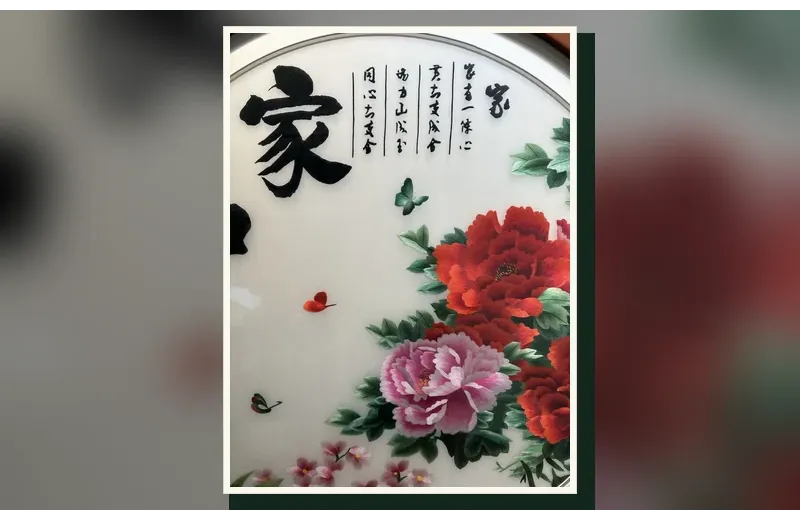
A Su Xiu panel does not begin with a needle. It begins with a decision about what to leave out.
Adapting the image
Ink paintings, oil paintings and photographs all translate differently into silk. A painting with generous empty space may be ideal, because the unworked silk ground can stand in for mist or distance. A busy photograph usually needs simplification: fewer competing details, a clearer focal point, and a palette that can be built from graded silk shades. The embroiderer and the client agree this before anything is marked on the fabric.
The outline
The silk ground is stretched taut on a wooden frame. A fine outline is then transferred — traditionally traced with a light hand using a fine brush or pouncing, in modern studios with a carefully controlled light box and a very fine marker. Only the essential contours are drawn: too much pencil on silk shows through pale thread later. These lines are guides, not a colouring boundary; the stitches will reinterpret them.
Planning the shade sequence
Before stitching, the skeins are grouped into graded runs for each part of the image — six greens for a leaf, a dozen greys for a mountain, a warm-to-cool run for a petal. The embroiderer marks, mentally or on a reference sheet, where each transition should happen. This plan is effectively the colour score of the piece; changing it halfway through means unpicking.
Deciding direction
Stitch direction is planned at the same time. Stitches follow the form: along a petal, around the curve of a cheek, down the length of a stem, following the growth of fur. Direction also controls sheen, so two areas of the same shade can be made to look different simply by turning the stitches. On a double-sided piece, the plan must also account for what happens on the other face.
Then the slow part starts
Once the outline and shade plan are agreed, the frame stays set up for weeks. From here, progress is measured in areas completed, and a mid-sized panel typically takes around three months. A well-prepared beginning does not make the stitching faster — it makes it possible to keep going without having to undo a bad decision later.
For custom work, see how a commission runs; for tools, see The Tools of the Frame.