


A Day in the Life of a Suzhou Embroiderer
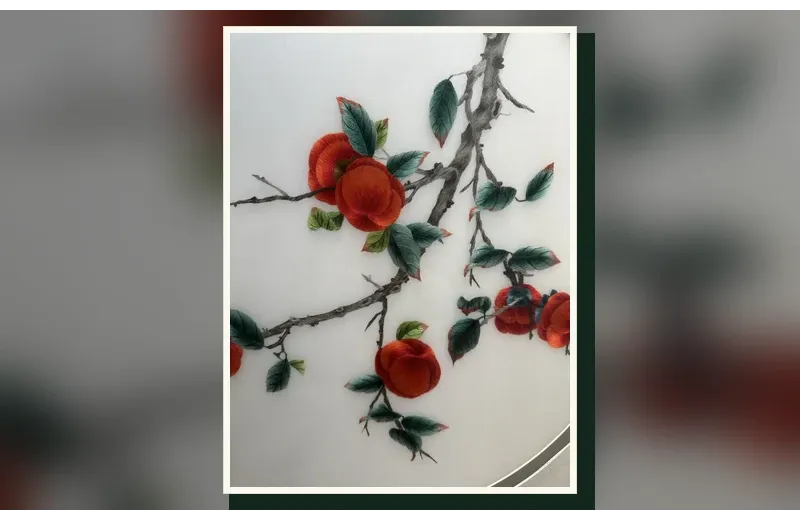
The embroiderers of Suzhou are often called xiu niang — literally "embroidery women", a term that reflects the craft's long matrilineal tradition. The working day is quieter and more deliberate than most people imagine.
Setting up
Light comes first. Even, indirect daylight is preferred because a shade chosen under a warm lamp can look wrong the next morning. The silk ground is already stretched on its frame; the embroiderer checks the tension, smooths the surface, and lays out the graded skeins for the day's area in sequence, from light to dark. Nothing is started until the shades are in order.
The rhythm of the work
Stitching is a cycle: a few minutes of fine work, then a pause to look. The needle is threaded with a split filament, a small group of stitches is placed, and the embroiderer leans back to compare the patch with the reference. Then the shade changes — sometimes every few dozen stitches — and the cycle repeats. Because the thread is so fine, re-threading is constant.
- Morning: usually the most detailed work, when the light is steady and the eyes are fresh.
- Midday: broader, more repetitive ground areas.
- Afternoon: shading adjustments and stepping back to judge the whole composition.
Training and hierarchy
A beginner learns tension and straight stitches on practice silk, then long, unglamorous background areas. Shading comes later. The most trusted hands work faces, animal eyes, fur and the final highlights — the parts that cannot be unpicked without disturbing everything around them. It commonly takes years before someone is given that responsibility. In studios, a master may plan the shade sequence and composition while a team works less critical passages, but a single collectible panel is normally carried by one maker throughout.
What the maker leaves behind
Not a signature in the corner, but a surface: the direction of the stitches, the way two shades are mixed, the slight individual rhythm in tension. Someone familiar with a studio can often recognise a maker's hand. That is also why progress photographs matter to buyers — they show a real person, a real frame and a piece at a real halfway point.
Three months of days like this
Multiply this quiet day by roughly ninety and you have a finished panel. There is no dramatic moment when it becomes art; it simply accumulates, a few square centimetres at a time.
Read the breakdown of the three months and how the craft is passed on.