


Luan Zhen: The Random Stitch That Paints with Silk
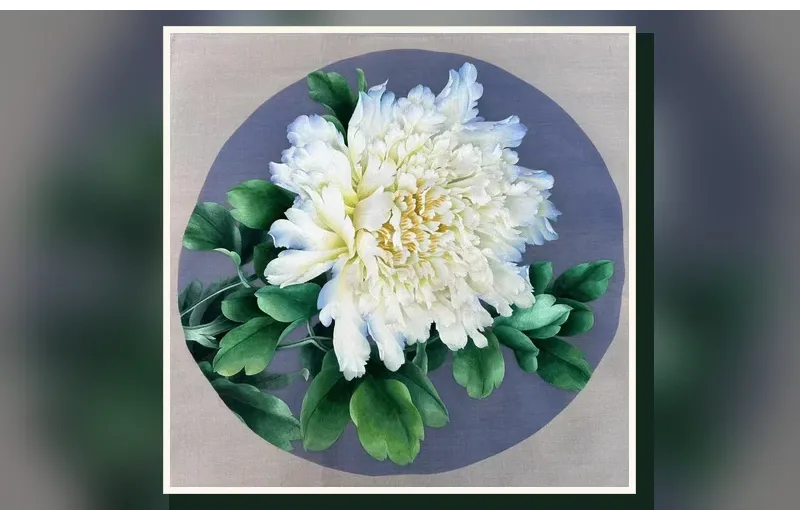
Luan zhen — "random" or "free" stitch — is the most painterly technique in Suzhou embroidery. Stitches cross, overlap and change direction, building an image the way a painter builds up layers of brushwork.
What makes it different
Traditional flat stitch lays orderly parallel rows. Random stitch deliberately abandons that order. Long and short stitches are placed at shifting angles, often in several passes, with different shades mixed directly on the silk rather than blended in a neat gradient. From a distance, the eye combines the overlapping colours into a soft, luminous tone; up close, the surface looks like a tangle of fine silk lines.
It is "random" only in appearance. The embroiderer is following the structure of the subject — the direction fur grows, the way cloud drifts, the fall of light across a face — and choosing each angle and shade accordingly.
What it is good at
- Fur and feathers. A cat's coat or a bird's breast needs softness without a hard outline. Crossed stitches break edges up naturally.
- Mist, water and sky. Sparse areas allow the silk ground to show through, creating atmospheric depth rather than a flat block of colour.
- Portraits and photographic subjects. Continuous tonal transitions are easier to build with layered, crossed colour than with orderly rows.
- Western-style painting. The technique was developed partly to make embroidery capable of oil-painting-like light and volume.
Why it is hard to fake
A machine can be programmed to cross stitches, but it cannot decide that this particular patch needs a cooler grey because the light is falling differently there. Random stitch is a sequence of thousands of small visual judgements, made by one person looking back and forth between the reference and the silk. That is also why it is slow: layers are added, assessed from a distance, and added again.
Random stitch and the three-month panel
Pieces that lean heavily on luan zhen often sit at the longer end of the typical three-month range. The embroiderer needs to keep stepping back to judge the whole image, and individual areas may be reworked several times before the tone settles. What looks like spontaneity in the finished panel is usually the most deliberately revised part of the work.
Compare with ping zhen, the flat stitch, or see how ink-wash landscape becomes embroidery.