


Ping Zhen: The Flat Stitch Behind Every Su Xiu Panel
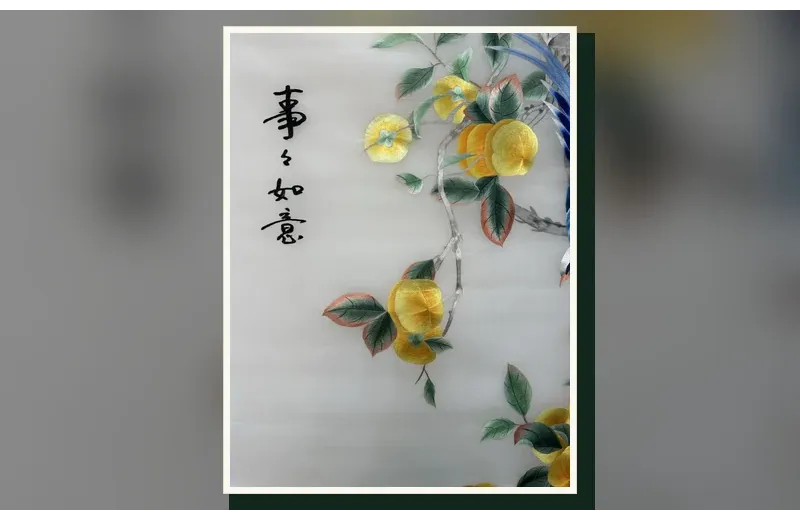
Almost everything in Suzhou embroidery begins with ping zhen — the flat or straight stitch. It is technically simple and extremely difficult to do beautifully.
What the stitch is
A short straight stitch is taken through the taut silk ground, then another beside it, and another, until an area is filled. Stitches lie parallel, close together, with their ends staggered between rows so no visible seam forms. The goal is a surface that reads as a continuous, even plane of colour rather than a collection of individual threads.
The three things that must be controlled
- Tension. Too tight and the silk puckers; too loose and the thread sits proud and catches dust. Even tension across thousands of stitches is a physical skill that takes years to make automatic.
- Length. Short stitches lie flatter and allow finer detail, but take longer. Choosing the right length for each area is a constant judgement about how the piece will be viewed.
- Direction. Stitches usually follow the form — along a petal, around a curve, down a stem. Direction also controls how light reflects, so it can be used to make two areas of the same shade look different.
From flat stitch to shading
Once a flat ground is laid, the embroiderer can begin modifying it. Layered rows of slightly different shades (tao zhen) soften a boundary. Fine added stitches (shi zhen) adjust a highlight. Crossed, painterly stitches (luan zhen) break the surface up entirely for fur or mist. All of these depend on a clean, flat base — which is why the plain-looking first weeks of work matter so much.
How to judge it in a finished piece
Look at a large, evenly coloured area — a sky, a background, a broad leaf — under raking light. Good ping zhen is calm: no ripples, no ridges, no visible row ends, and no sudden change in sheen unless the composition calls for one. If the surface looks wavy or patchy, the tension wandered. Because this stitch covers most of the panel, its quality sets the quality of the whole work.
Why it takes months
There is no way to speed up thousands of individually placed, individually tensioned stitches without changing the result. A single mid-sized panel, worked by one embroiderer, commonly takes about three months — and a large share of that time is this quiet, repetitive, highly controlled groundwork.
Continue to luan zhen, the random stitch, or back to the full stitch vocabulary.